













.png)






























































.png)



If you’ve been paying attention to recent announcements in automotive technology, something significant is happening.
The dealership software market has officially entered its next phase.
More providers are introducing Salesforce-powered CRM and DMS platforms. More conversations are centered around cloud-native infrastructure. More dealer groups are questioning whether legacy systems can support where they’re headed.
Part 1: The Shift Is No Longer Theoretical
The direction was clear at this year's NADA conference: the industry is moving toward enterprise-grade, cloud-based architecture.
For DealerTeam, this isn’t a pivot.
It’s validation.
More than 12 years ago, we made a deliberate decision to build a Dealer Management System natively on Salesforce. At the time, most dealership software was server-based, heavily siloed, and resistant to meaningful change. Innovation meant incremental improvement — not structural transformation.
We believed the future required architectural change. Today, the market is catching up.
The Growing Demand for Modern Dealer Infrastructure
Dealerships are operating in a dramatically different environment than they were even five years ago:
- Customers expect seamless digital engagement from first click to final signature.
- Dealer groups demand centralized visibility across multiple rooftops
- OEM reporting requirements continue to expand.
- Cybersecurity expectations are rising.
Leadership teams want real-time operational intelligence — not next-day summaries. This is no longer a simple transactional business. It’s a data-driven, multi-channel enterprise.
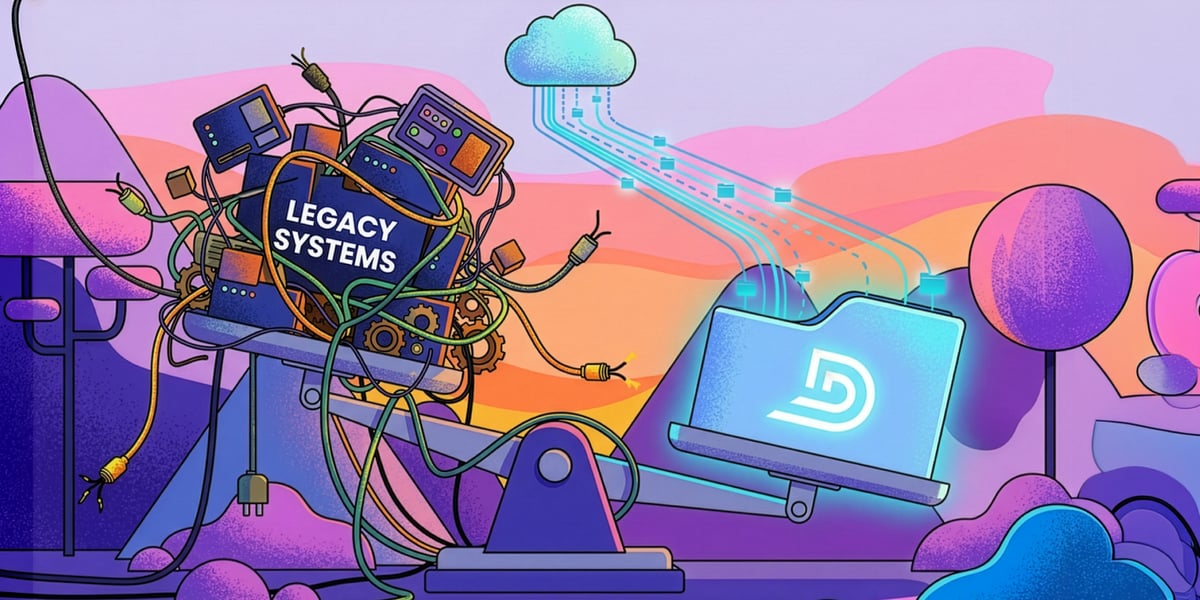
The challenge? Most legacy DMS platforms weren’t designed for this level of operational complexity.
Many still rely on fragmented modules stitched together through integrations, batch data updates, and rigid workflows that slow adaptation. They were built for a different era — one where single rooftops operated largely independent and reporting cycles moved at a slower pace.
The shift toward Salesforce-powered systems signals something bigger than new technology adoption.
It signals a broader realization:
- Disconnected Systems are no longer sustainable
- Dealerships don’t just need a better CRM
- They don’t just need a cloud-hosted accounting system.
- They need unified infrastructure.
And the growing number of companies entering this space confirms what we’ve believed for years, the demand for modern architecture is real — and accelerating.
A rising tide may lift all boats. But not all boats are built the same way.
Built on Salesforce: What That Actually Means
“Built on Salesforce” has quickly become a headline phrase in the automotive software space. But the phrase alone doesn’t define the architecture.
There’s a significant difference between:
- A CRM running on Salesforce that integrates with a DMS
- A DMS with CRM functionality layered into it
- A fully unified Dealer Management System built natively on Salesforce from the ground up
That distinction matters more than most dealers realize.
When systems are connected through integrations, they still operate as separate data environments. Data must be synchronized. Workflows must reconcile across platforms. Reporting often requires stitching together information from multiple sources.
Integration reduces friction.
Architecture eliminates it.
DealerTeam was designed as a single-platform ecosystem — not a collection of connected applications.
And that difference becomes critical as dealerships scale.
Why the Timing Matters
The technology decisions made today will determine whether dealer groups are positioned for growth in the next few years— or constrained by infrastructure.
The dealership industry is at an inflection point:
- Consolidation continues.
- Multi-location groups are expanding.
- Alternative retail models are emerging.
- Operational transparency is now a requirement, not a choice.
The recent wave of Salesforce-powered entrants confirms something important. The market has accepted that enterprise-grade, cloud-native systems are the future. But validation of the category is only the beginning.
Because once the industry agrees on the direction, the next question becomes far more important:
Who has the experience, depth, and architectural maturity to deliver it effectively?
That’s where the conversation shifts. And that’s where differentiation becomes clear. The market may be catching up but experience still matters.
In Part 2 of this series, we’ll break down:
- What truly separates a unified DMS from a connected stack
- How DealerTeam differentiates from newer entrants
- Why architectural decisions made early matter long-term
- And what dealers should evaluate before making their next platform decision